An audiobook is not simply a printed book read into a microphone. It is a separate edition that requires confirmed audio rights, a voice suited to the material, a listener-friendly script, careful editing, technical quality control and a distribution plan.
This guide explains the process so independent authors can make informed decisions before recording begins.
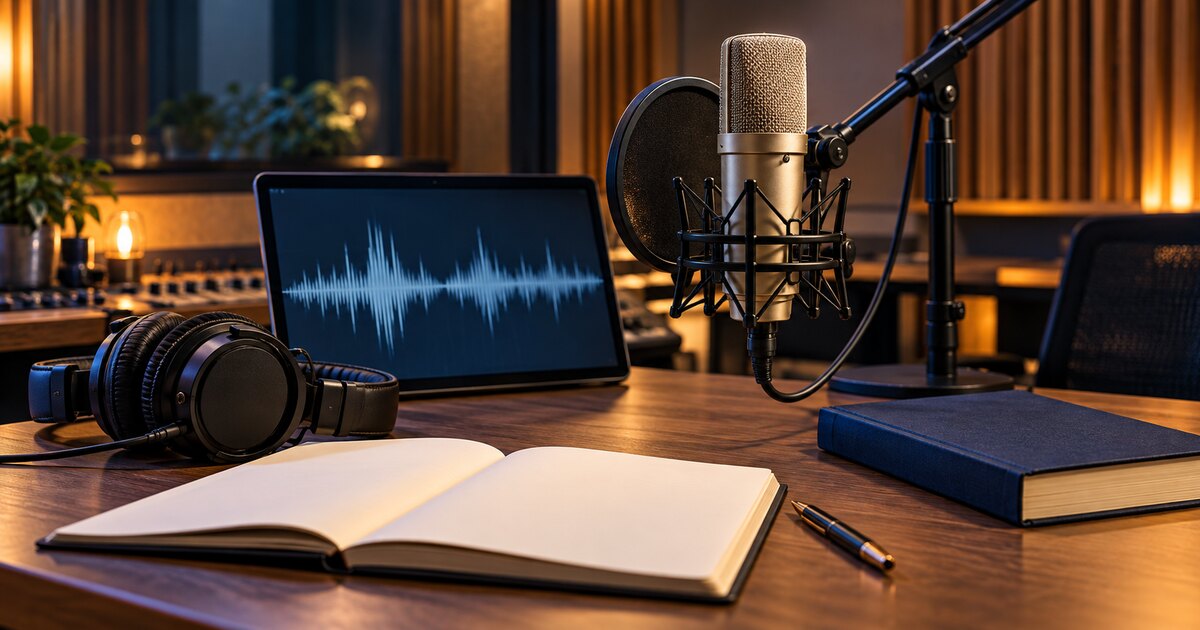
Before hiring a narrator or uploading audio, confirm who owns the right to produce and distribute an audio edition. An author who signed a traditional publishing, translation, film or audio agreement should review the contract rather than assuming every format remains available. If another party controls the audio rights, written authorization may be required.
ACX identifies the person or company controlling the audiobook rights as the rights holder and instructs authors to verify those rights before production. Keep contracts, licenses, narrator releases, music permissions and payment records together. A clean rights file protects the author, producer and distributor if ownership is questioned later.
Define the audience and distribution goal before choosing a production method. A memoir narrated by its author creates a different listening experience from a multi-character thriller. A business guide may need authority and clarity, while a children’s title may depend on pacing, character distinction and carefully controlled sound effects.
Write a short audio brief that records the desired tone, audience, accent, pronunciation, point of view, content warnings, estimated finished length and intended retailers. This prevents the voice decision from becoming a matter of personal taste alone.
Professional human narration remains the most flexible option for emotion, dialogue and performance. Authors can audition narrators, select a producer and approve a representative sample before the full recording proceeds. ACX currently states that submitted audiobooks must be narrated by a human unless another method is specifically authorized. Its production workflow also uses a 15-minute checkpoint so the rights holder can confirm performance and technical direction early.
Self-narration can work well for memoir, thought leadership and nonfiction when the author’s identity is central to the book. It still requires coaching, a controlled recording environment, editing and mastering. Familiarity with the manuscript does not automatically produce clear pacing or consistent sound.
Digital narration is available through some channels, but eligibility and distribution vary. Apple Books offers a digitally narrated program through preferred partners for eligible English-language ebooks already available on Apple Books. Titles are labeled as narrated by Apple Books. Spotify for Authors says it accepts digitally narrated audiobooks for distribution on Spotify only. Authors should therefore verify the policy of every intended destination instead of assuming one digital file will be accepted everywhere.
A print reader can examine a table, footnote or illustration at their own pace. A listener cannot. Prepare a recordable script that translates visual information into natural speech without changing the meaning of the book.
Lock the script before recording. Rewriting several paragraphs after narration begins can require expensive pickups and can introduce differences in tone, microphone position and room sound.
Select audition passages that reveal the real demands of the book. For fiction, include dialogue, narration and emotionally complex material. For nonfiction, test technical vocabulary, lists and explanatory passages. Evaluate more than vocal attractiveness: listen for comprehension, pacing, character consistency, breath control and whether the narrator serves the intended reader.
Before approving full production, review a substantial checkpoint sample on headphones and ordinary speakers. Confirm pronunciation, performance, noise level, pacing and chapter formatting. Provide specific notes with time stamps. Early approval should establish the standard for the remaining book, not eliminate the need for final quality review.
Professional production includes recording, removing mistakes and distracting noise, assembling pickups, checking continuity and mastering the finished files to the destination’s current specifications. The narrator’s volume, tone and distance from the microphone should remain stable across recording days.
Each chapter should be reviewed against the approved script. A quality-control listener can flag missing words, repeated lines, incorrect pronunciations, unexpected noises and performance inconsistencies. Technical checks should cover file format, channel configuration, loudness, peaks, noise floor, opening and closing room tone, chapter separation and credits. Requirements can change, so producers should verify the current submission rules immediately before delivery rather than relying on an old preset.
The audio edition needs accurate metadata: title, subtitle, author, narrator, language, description, categories, rights information, release date and retail price. These details should agree with the content and other editions while correctly identifying the narrator and audio format.
Audiobook storefronts generally use square cover artwork, so simply forcing a rectangular print cover into a square can make the title unreadable or crop important elements. Apple Books allows qualifying participants to provide compliant custom audiobook artwork; otherwise, its digital-narration workflow can adapt the ebook cover with a coordinated background. Review cover requirements for every destination before exporting the final image.
Distribution decisions affect reach, control and contractual obligations. ACX offers production and distribution pathways connected to Audible, Amazon and Apple Books, with choices and terms that authors should compare before committing. Spotify for Authors currently lets self-published authors upload directly to Spotify on a non-exclusive basis and offers an option to send a copy through Voices by INaudio for wider retail distribution.
Apple’s digital narration program is distributed through Apple Books and uses preferred partners including Draft2Digital, Ingram CoreSource and PublishDrive. Apple says authors retain audiobook rights and may produce and distribute other versions. Because services differ in eligibility, territories, royalties, exclusivity and accepted narration, read the current agreement for the specific route you choose.
Do not treat the audiobook as a silent file upload. Prepare a short sample, narrator introduction, listening links, social graphics, email announcement and launch calendar. Coordinate the release with the author website and existing print and ebook pages. Spotify for Authors currently provides audience insights, author profiles, promotional cards and redemption codes that can support platform-specific promotion.
Measure meaningful signals such as sample plays, completed listening, redemption-code use, link clicks and audience location where available. Avoid promising rankings or sales. A strong audiobook expands the ways readers can experience a book, but results depend on the title, audience, distribution, pricing and sustained promotion.
The US Publisher can help authors evaluate audio readiness, prepare the narration script, organize auditions, coordinate production, review files, prepare metadata and plan distribution. The appropriate scope depends on the book, narration method, intended retailers and rights position.
Call +1 737-282-5860 or email info@theuspublisher.com to request an audiobook-production assessment.
Official resources: ACX Audio Submission Requirements, ACX Audiobook Rights, ACX 15-Minute Checkpoint, Apple Books Digital Narration, and Spotify for Authors.
Disclaimer: This article provides general educational information. Audiobook-platform requirements, availability, contracts, royalties and review processes may change. Verify the current rules and agreement for every service before production or submission. No publisher or service can guarantee acceptance, placement, listener numbers or sales.
The cost depends on several factors, like the book size, type of book, format, number of pages, and other services you wish to utilize. You may contact us for a free estimate!
You will! We may do all the work, but it was 100% your idea, and thus you get full ownership of your entire book!
We have worked with thousands of amazing aspiring authors like you, and we have gained their trust, and we’re confident that we’ll achieve yours, too!
Without customer support and constant communication, we won’t be able to write your book the way you want it. Our support team is available at your beck and call!
The book writing process typically depends on the length of the book and the frequency of modifications; however, a 200-page book takes about 2-3 months.
You’re subject to 100% refundability if unsatisfied with the first chapter!
 Autobiography
Fiction
Non-Fiction
Children’s Book
Self-Help Book
Travelogue
Photobook
Other